
Humanity’s Journey Into the Cosmos
Exploring the Depths of Space as Both Science and Story.
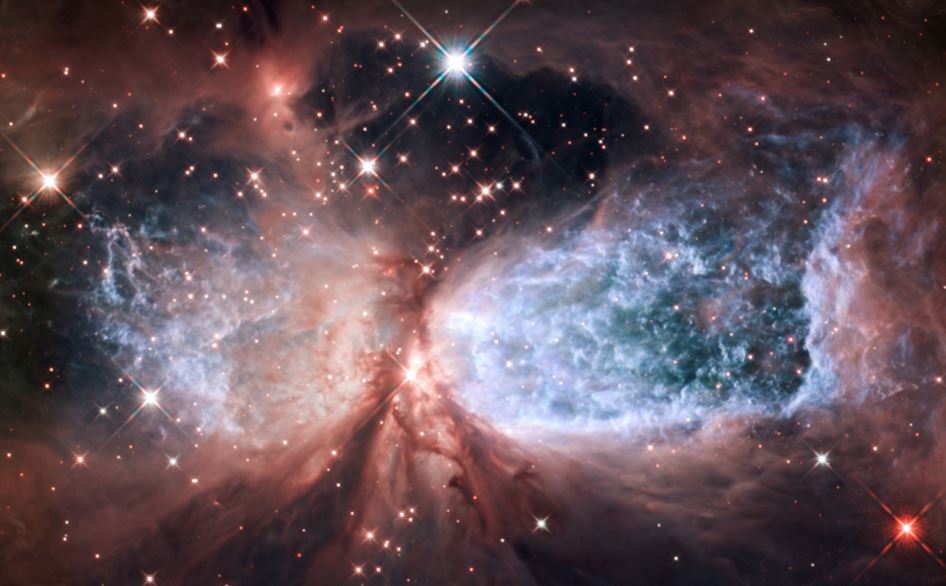
The Origins of Our Cosmic Curiosity
From the earliest nights when ancient humans looked upward and traced constellations into the sky, the desire to understand the universe has been a defining trait of our species. Cave paintings, myths, and early calendars were not merely cultural artifacts, they were attempts to interpret celestial rhythms and assign meaning to them. This curiosity eventually transformed into structured inquiry through civilizations like the Babylonians, Egyptians, and Mayans, each building astronomical systems to track the stars. Today, astrophysics continues this legacy, guided not only by mathematical rigor but by the same primal wonder that once inspired ancient storytellers.
The Expanding Universe and Our Place Within It
One of the most profound discoveries of the twentieth century was that the universe is not static. Thanks to Edwin Hubble’s observations, we now know galaxies are moving away from one another, expanding space itself. This realization placed humanity within a dynamic cosmos, where time and distance intertwine on scales that stretch the imagination. Yet, far from making us insignificant, this discovery reinforces our role as participants in a grand unfolding story. By studying the expansion, the cosmic microwave background, and the distribution of galaxies, we are not passive observers but active narrators of the universe’s evolution.
The Power of Telescopes and Instruments
Every leap forward in astronomy has been tied to advances in technology. Galileo’s simple telescope revealed moons orbiting Jupiter, shattering the geocentric worldview. Centuries later, space-based observatories like Hubble, Chandra, and James Webb opened entirely new windows into the universe, capturing light from billions of years in the past. Instruments now detect wavelengths invisible to the naked eye, infrared, X-ray, and radio, each unveiling dimensions of the cosmos hidden from ordinary sight. Through these tools, we gain the ability not only to observe but to reconstruct the universe’s history with unprecedented precision.
The Mysteries That Define Modern Astrophysics
Even with these advances, the universe retains secrets that push the boundaries of our understanding. Dark matter, a form of matter that cannot be seen but whose gravitational effects are undeniable, makes up most of the universe’s mass. Dark energy, an even stranger force, drives the acceleration of cosmic expansion. Black holes, once theoretical oddities, now dominate the frontier of physics as laboratories where the laws of space and time bend to their limits. Each of these mysteries is a reminder that discovery is not about final answers but about deeper questions, each opening new directions of inquiry.
Humanity’s Efforts to Reach Beyond Earth
While telescopes bring the universe closer to us, space exploration represents our effort to physically extend into the cosmos. The Apollo missions marked humanity’s first steps onto another world, while robotic explorers such as Voyager, Perseverance, and New Horizons continue to carry our instruments, and in some ways our presence, into distant regions. These missions embody a philosophy of exploration that unites practical science with symbolic meaning. They tell us that curiosity is not confined to theory but requires motion, risk, and the willingness to leave Earth behind.
The Interplay of Science and Imagination
Astronomy does more than measure and categorize; it sparks imagination. Science fiction, inspired by real discoveries, creates visions of futures where interstellar travel, alien encounters, and colonization of other worlds are possible. In turn, these imaginative narratives influence science itself, motivating engineers, physicists, and dreamers to push boundaries. The dialogue between fact and fiction creates a fertile ground where possibility becomes innovation, and exploration is fueled as much by creativity as by data.
Cosmic Perspectives and Human Meaning
Looking at Earth from space has transformed our understanding of ourselves. The famous “Pale Blue Dot” photograph captured by Voyager 1 shows Earth as a small point of light, suspended in darkness. This image conveys both humility and significance. It reminds us that our planet is fragile and unique, but also that every achievement, story, and civilization exists within this small sphere. Contact with the cosmos teaches us that to study the stars is also to reflect on humanity itself, our responsibilities, our unity, and our shared destiny in a vast and interconnected universe.
The Future of Cosmic Exploration
As we move into the future, the horizons of astronomy continue to expand. Gravitational wave observatories now allow us to detect ripples in spacetime itself, revealing events such as black hole mergers. Plans for crewed missions to Mars promise to extend our physical presence in the solar system. Advances in artificial intelligence enable us to analyze massive data sets from sky surveys, uncovering new exoplanets and cosmic structures. The future of space exploration is not limited to what we will discover, it is also about how these discoveries will reshape our collective vision of what it means to exist in the universe.